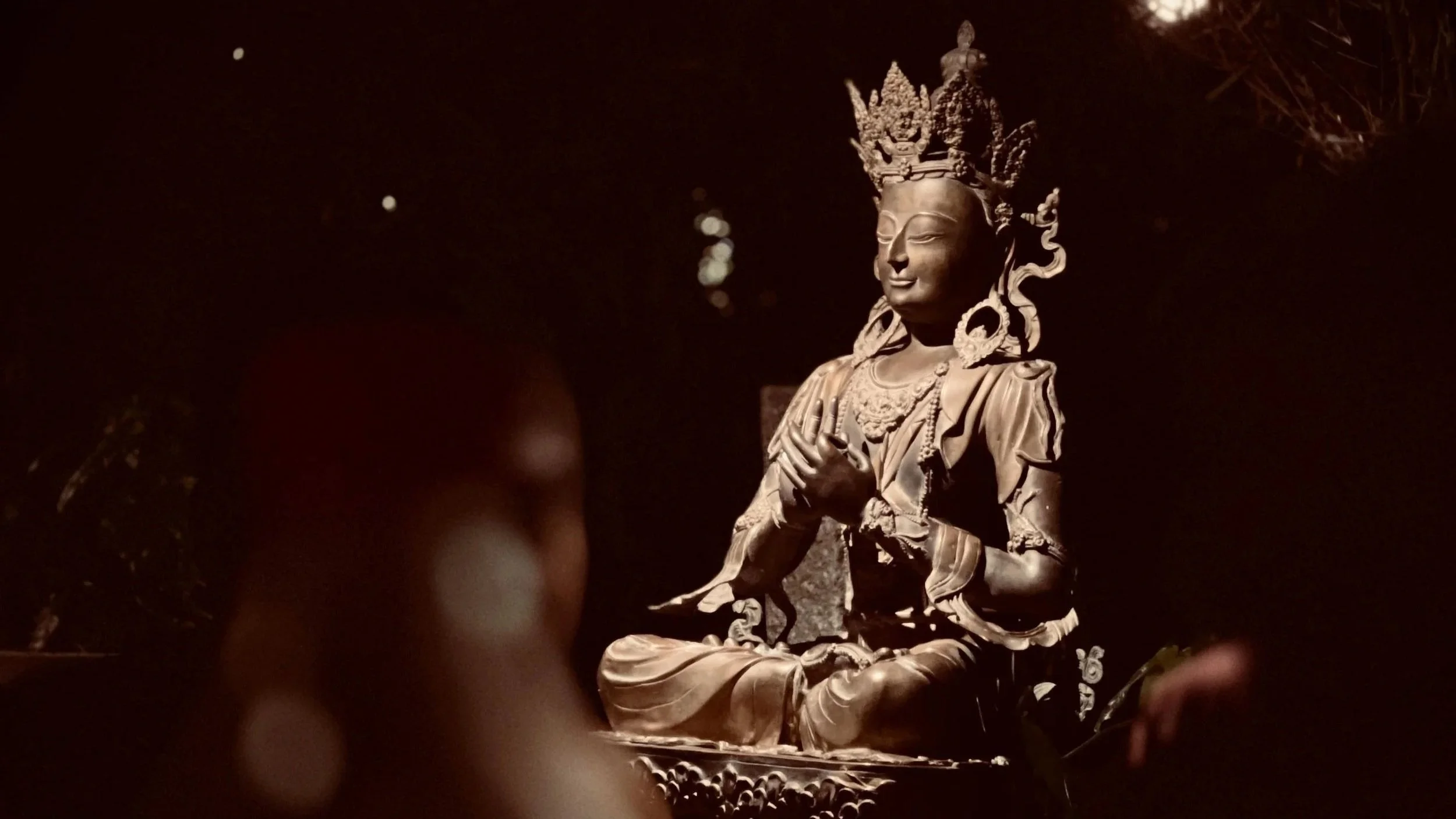
Vijñāna Bhairava Tantra: Yoga Through the Lens of Direct Experience
-
This is a 10-part course exploring key methods of attention (dhāraṇā-s) drawn from the Vijñāna Bhairava Tantra.
The course integrates:
traditional understanding
practical application
and guided experiential work
It is not a theoretical study alone, nor a collection of techniques.
It is a refinement of how we perceive, attend, and relate to experience.
-
Across the 10 sessions, you will explore:
How breath becomes a gateway to subtle awareness
The role of pauses and transitions in perception
How the senses can support—not distract from—practice
The development of stable, clear attention (dhāraṇā)
The natural unfolding toward meditative continuity (dhyāna)
The integration of awareness into daily life
You will also be introduced to:
selected dhāraṇā-s from the text
the relationship between Tantra and classical yoga
the role of mantra and inner listening as supports for practice
Course Description
The Vijñāna Bhairava Tantra presents a series of precise entry points into awareness—rooted in everyday experience: breath, sound, sensation, and attention.
In this course, these teachings are approached in a way that is:
structured
clear
and grounded in practice
Each class builds progressively, moving from:
external awareness → internal refinement → integration
Rather than adding complexity, the course supports a subtle shift in how practice is approached.
Through this, yoga becomes:
more internal
more precise
and more directly transformative
-
Format: 10 classes
Duration: Approx. 1 hour per class
Structure of Each Class:
Opening centering or chant
Context and teaching
Exploration of 1–2 dhāraṇā-s
Guided experiential practice
Reflection and integration
-
This course is suitable for:
yoga teachers seeking a deeper understanding beyond technique
dedicated practitioners interested in the inner limbs of yoga
students of prāṇāyāma, meditation, or Yoga Sūtra study
those looking to refine attention and awareness in practice
No prior study of Tantra is required.
A willingness to observe, reflect, and engage with subtle practice is essential.
-
Clear, structured teaching rooted in traditional understanding
A balance of theory and direct experience
Practical methods that can be integrated into daily practice
A progressive deepening across the 10 sessions
This is not a fast-paced or technique-heavy course.
It is a steady unfolding of understanding through experience.
-
May 20 - July 22, 2026 (10 consecutive Wednesdays)
6:30-7:30 IST / 2-3pm London
Meetings via Zoom
Recordings will be available for a short time)