The culmination of the Bhagavad Gītā’s teachings on reality, consciousness, & liberation
Part 4 brings the Bhagavad Gītā to its culmination. Building upon the foundations of self-knowledge, Karma Yoga, and inner discipline established in the earlier modules, this course explores some of the Gītā’s most profound teachings on reality, consciousness, the guṇas, dharma, and liberation.
Through the study of Kṣetra and Kṣetrajña, the three guṇas, divine and demonic qualities, the nature of happiness, and the path of surrender, students are guided beyond philosophical understanding toward direct insight into the nature of the Self. The course concludes with the Gītā’s highest teaching: freedom through complete surrender to the Supreme.
What you will learn in Part 4
A deeper understanding of consciousness and reality
Insight into the forces that shape human experience
A clearer understanding of dharma, renunciation, and liberation
An appreciation of the Gītā’s highest teaching of surrender
A complete overview of the philosophical journey of the Bhagavad Gītā
Course Format
15 Classes, On demand - learn at your own pace
Philosophical clarity rooted in traditional sources
Psychological insight into lived experience
Structured explanation of key concepts
Step-by-step unfolding of the text
Access to the course videos for 12 momths
Course Structure
-
Introduces the Vedāntic understanding of reality through the classic rope-and-snake and shell-and-silver analogies. Explores how ignorance shapes perception and obscures truth.
-
Examines the distinction between the field of experience and the consciousness that knows it. Drawing on Sāṃkhya, the class explores the principles of creation and dissolution.
-
Explores the difference between intellectual understanding and direct experience of the Self. Focuses on recognising consciousness as one’s true nature.
-
Centred on Gītā 13.27, this class explores the same consciousness present in all beings, the immortality of the Self, and freedom from the fear of death.
-
Introduces sattva, rajas, and tamas as the forces shaping the mind and personality. Examines how clarity, agitation, and inertia influence experience.
-
Explores the symbolic upside-down tree of Chapter 15, the distinction between the perishable and imperishable, and the path beyond worldly attachment.
-
Introduces the qualities that support spiritual growth and those that obstruct it. Fearlessness, integrity, and self-mastery are contrasted with destructive tendencies.
-
Explores humility, non-violence, purity, forgiveness, and steadiness as practical disciplines to be cultivated in daily life.
-
Examines the psychology of desire, pride, anger, and dissatisfaction, and how these tendencies bind the mind and obscure clarity.
-
Explores the role of faith, discipline, diet, and generosity through the lens of the three guṇas, revealing how everyday habits shape inner life.
-
Reflects on the distinction between the eternal and the temporary, and unfolds the deeper meaning of Om Tat Sat as a guide for sacred action.
-
Explores the difference between attachment to results and true renunciation, revealing freedom through letting go of ownership and expectation.
-
Examines the sāttvic, rājasic, and tāmasic expressions of intellect, determination, and happiness, providing insight into human behaviour and motivation.
-
Explores varṇāśrama as a framework based on qualities and natural inclination, encouraging students to recognise and live in alignment with their own dharma.
-
The culmination of the course and the Gītā itself. Through the teaching of sarva-dharmān parityajya, Dr Bhat explores prapatti (total surrender) as the doorway to peace, freedom, and liberation.
By the end of Part 4, you will have:
A deeper understanding of consciousness and reality
Insight into the forces that shape human experience
A clearer understanding of dharma, renunciation, and liberation
An appreciation of the Gītā’s highest teaching of surrender
A complete overview of the philosophical journey of the Bhagavad Gītā
Your Teacher
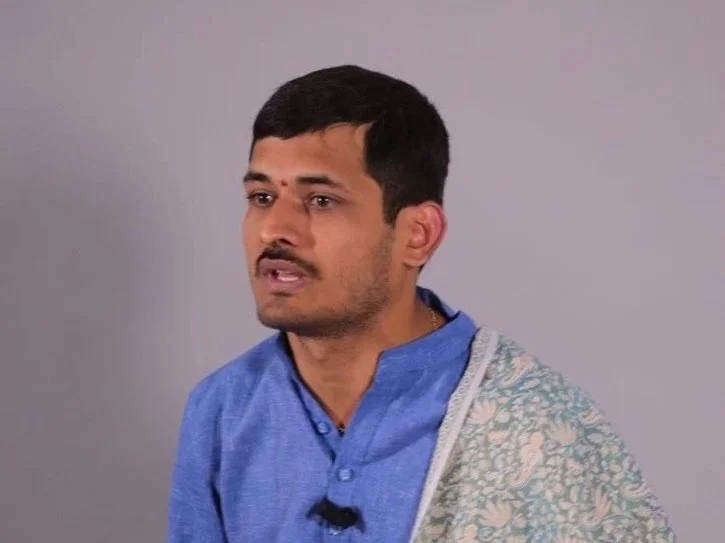
Dr Vigneshwar Bhat
Dr. Vigneshwar Bhat was born and raised in Karnataka. He holds a Ph.D. in Karma Meemamsa from Karnataka Sanskrit University. He earned gold medals for his M.A. degrees in Poorvameemamsa Vidwat Uttama and Sahitya Acharya from Rashtriya Sanskrit Vidyapeetha, Tirupati. His expertise extends to Śauta, Smārta, Tāntrik, and Paurāṇik rituals, and he is a Vedic priest and professor.
His research interests include Indian Philosophy, Yoga, Vedas, Sanskrit, and Indian Culture and Traditions. Dr. Bhat has authored numerous papers and books, shedding light on the profound wisdom of ancient scriptures.
Begin Part 4: TJñāna, Dharma & Mokṣa
15 structured on-demand classes. Self-paced learning. A deep but accessible entry into the Bhagavad Gītā.