
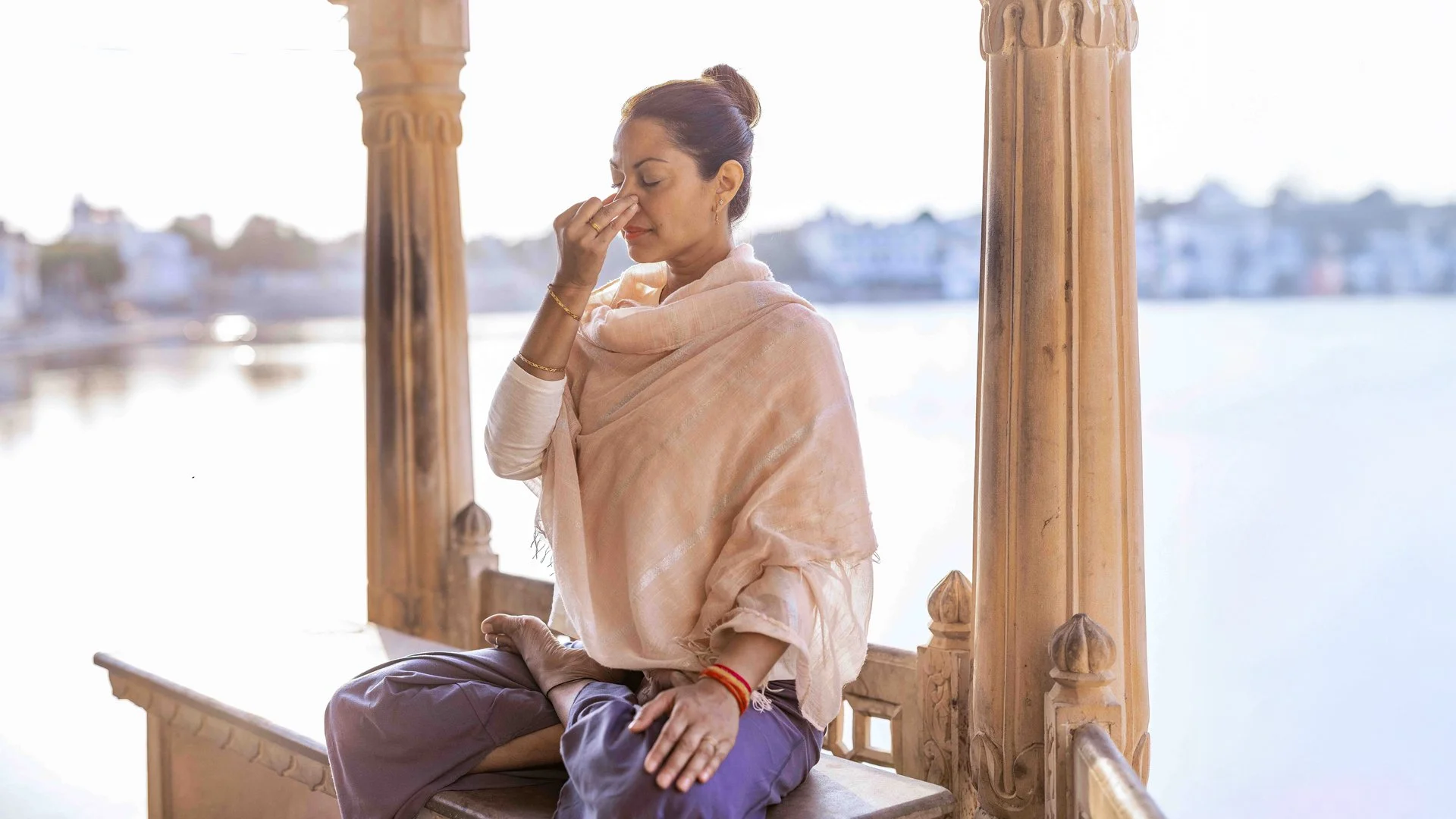
Pranayama
Master the Breath. Transform your Life.
Traditional Pranayama Instruction Rooted in Authentic Lineage.
Breath is not merely a biological function; it’s the bridge between body, mind, and consciousness. In the classical yoga tradition, prāṇāyāma is one of the most potent and transformative limbs of the ashtanga path: a systematic science for regulating prāṇa, the life force itself, with precision, awareness, and deep respect for the individual.
At Tara Mitra Yoga, pranayama instruction is offered in the spirit of the living traditions from which it originates: the Sri T Krishnamacharya lineage and the Kaivalyadhama lineage of Sri O P Tiwariji. These teachings are not extracted from their source and repackaged for popular consumption. They are transmitted with the depth, sequence, and integrity that authentic, lineage-based teaching demands.
Whether you are encountering pranayama for the first time or returning to deepen an established practice, one-to-one instruction ensures that your practice is appropriate to your constitution, current state of health, and specific goals, aligned with the classical understanding of adhikāra (readiness and qualification of the student).
Sessions are available one-to-one, online.
WHAT IS PRANAYAMA?
Prāṇāyāma: The Classical Understanding
The word prāṇāyāma is composed of two Sanskrit roots: prāṇa, the universal life-force that animates all living beings, and āyāma, meaning extension, expansion, and mastery. Together, they point to a practice far beyond what is commonly taught as “breathwork” in contemporary wellness culture.
In the Yoga Sūtras of Patañjali (II.49–II.53), prāṇāyāma is defined as the conscious regulation of inhalation (pūraka), exhalation (recaka), and retention (kumbhaka), refined through sustained attention to place (deśa), duration (kāla), and number (saṃkhyā). Patañjali places this practice explicitly after āsana, as a prerequisite for the subtler internal limbs: pratyāhāra, dhāraṇā, and dhyāna. It is, in his own words, that which renders the veil over inner light fit to dissolve, tataḥ kṣīyate prakāśāvaraṇam (II.52).
In the Krishnamacharya tradition, pranayama is understood through the principle of vinyāsa krāma—a step-by-step progression uniquely designed for the individual. The ratio of breath, the use of bandha (energetic locks), the introduction of kumbhaka, and the specific techniques prescribed are all determined by careful assessment of the student’s constitution (prakṛti), current condition (vikṛti), and the quality of their nervous system.
From the Kaivalyadhama perspective, rooted in the scientific and classical approach of Swami Kuvalayananda and continued through Sri O.P. Tiwariji, pranayama is studied as both a physiological and spiritual science. Precise technique, correct posture, and progressive practice form the foundation, with rigorous attention to the therapeutic effects of breath on the nervous system, the endocrine system, and the subtle body.
The breath is the only autonomous function of the body that can be brought under conscious regulation, making it the most immediate and powerful gateway to the autonomic nervous system, and through it, to the deeper strata of the mind. When prāṇa is disordered, the mind is disordered. When prāṇa is regulated and refined, the mind becomes fit for meditation.
PRANAYAMA BENEFITS
Traditional pranayama practice works simultaneously at multiple dimensions of the human system:
-
Regulates the autonomic nervous system, balancing sympathetic and parasympathetic responses
Improves respiratory function, lung capacity, and cardiovascular health
Supports conditions including anxiety, insomnia, chronic fatigue, hypertension, and digestive imbalance
-
Reduces stress and anxiety at the root level
Improves emotional regulation, mental clarity, and sustained concentration
Cultivates the conditions necessary for pratyāhāra — the natural withdrawal of the senses
-
Works with the five vāyus (prāṇa, apāna, samāna, udāna, vyāna) to restore systemic balance
Balances the three doṣas (Vāta, Pitta, Kapha) through Ayurveda-informed breath prescription
-
Prepares the antaḥkaraṇa (the inner instrument of mind) for dhāraṇā and dhyāna
Establishes a living, progressive daily sādhana (practice) rooted in authentic tradition

Meet Your Teachers
Dr. Rob Lamport (Dr of Chiropractic)
Dr Rob Lamport is a dedicated student of pranayama in the classical Kaivalyadhama tradition, having studied for over 15 years under Sri O.P. Tiwariji — one of the foremost living masters of traditional pranayama and a direct carrier of Swami Kuvalayananda’s lineage. This tradition is distinguished by its rigorous, systematic approach to breath: precise technique, intelligent sequencing, and an unwavering respect for the classical texts and their living transmission.
In addition to his pranayama practice, Dr Rob is a Gonstead chiropractor and a globally recognised anatomy educator for yoga teachers — having taught anatomy to advanced teacher training programs around the world. This rare convergence of deep anatomical knowledge, clinical experience, and authentic pranayama lineage gives his teaching an exceptional precision, particularly in understanding how breath mechanics, spinal structure, and the nervous system inform one another.
Dr Rob is the founder of More Than Anatomy, a global educational platform for yoga teachers and movement professionals.
Learn more about Dr Rob → [link to About page or More Than Anatomy]
| Kaivalyadhama Lineage (Sri O.P. Tiwariji)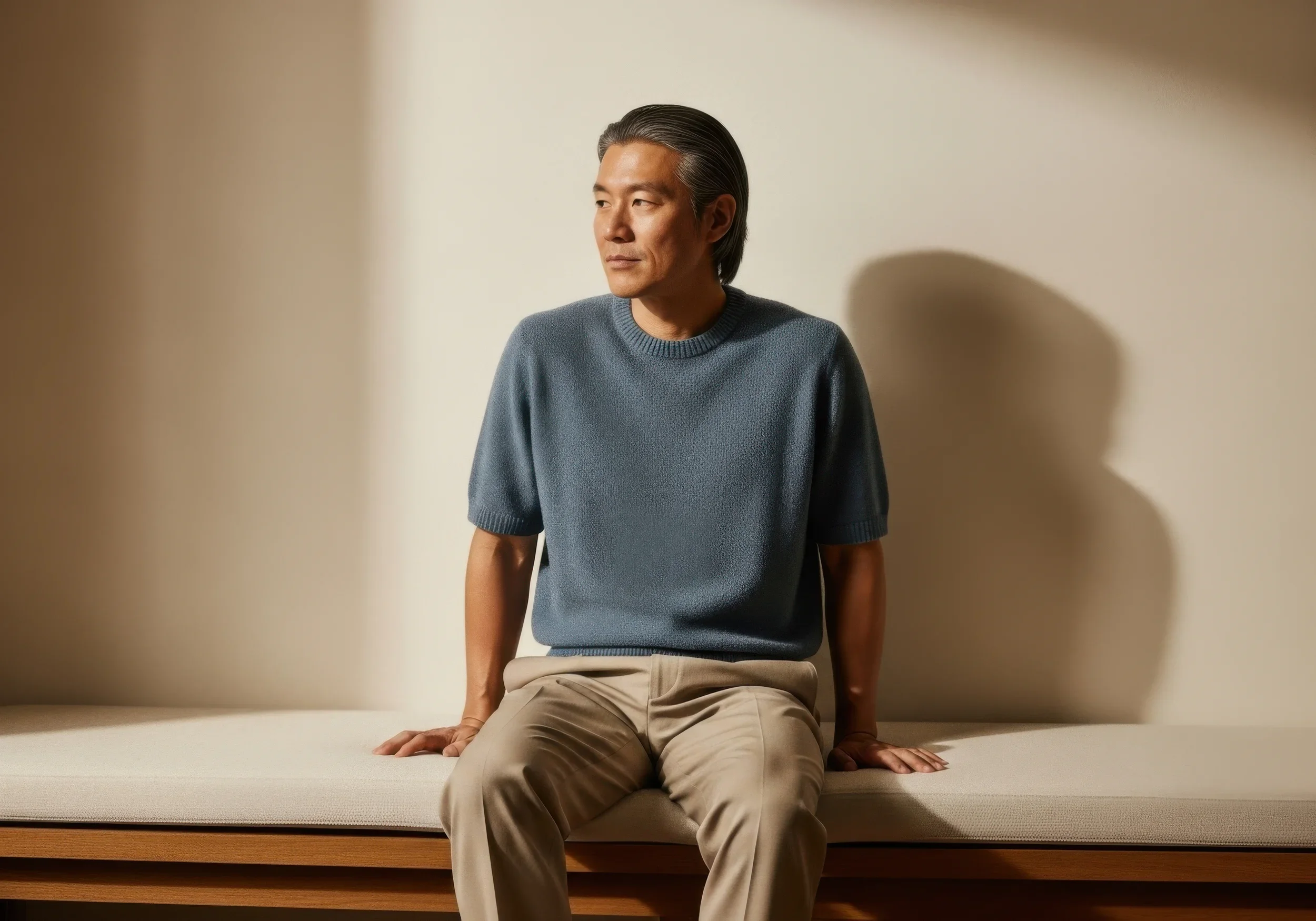
Tara Mitra is a certified Yoga Therapist (C-IAYT), Vedic chanting practitioner, and yoga educator with over 20 years of dedicated practice and 17 years of teaching. Her pranayama instruction is firmly rooted in the Krishnamacharya lineage — specifically the teachings transmitted through KYM (Krishnamacharya Yoga Mandiram), Sri T.K.V. Desikachar, and
Raghu Ananthanarayanan — where breath is understood as inseparable from the individual’s constitution, inner capacity, and evolutionary stage.
Tara’s approach integrates pranayama within the full scope of yoga cikitsā (yoga therapy), drawing on her deep studies in Vedic chanting, yoga philosophy, the Yoga Sūtras, and Āyurveda. Having lived five years in Mysore, India, studying at the source, and carrying both Indian and Canadian lineage, she brings a rare authenticity to her teaching — one that honours the integrity of these traditions without compromise.
She teaches university-level courses for advanced yoga teachers and specialises in Antaranga Yoga — the inner limbs of practice — within the Sri Krishnamacharya lineage.
Learn more about Tara → [link to About page]
| Krishnamacharya LineageTara Mitra
SESSION DETAILS
All pranayama sessions are offered one-to-one, online, providing a fully personalised approach to breath instruction tailored to your unique constitution, health history, and practice goals.
It is strongly recommended to begin with a minimum commitment of three months, as traditional pranayama is a progressive science — each stage must be established with stability before the next is introduced. Rushing the process undermines both safety and effectiveness.
Session structure:
An initial assessment session to evaluate your current state, breath quality, and goals
2–3 sessions to establish your foundational practice and correct any patterns that need to be addressed
Ongoing weekly or biweekly sessions to progress your practice with precision and care
Sessions may be scheduled weekly, biweekly, or as determined by your teacher based on your progression and readiness.
You may book sessions with Tara Mitra (Krishnamacharya lineage) or Dr. Robert Lamport (Kaivalyadhama lineage) — both traditions are classical, rigorous, and fully authentic. Your teacher will be selected based on your goals, background, and natural alignment with a given lineage.
INVESTMENT
[Insert pricing packages here — same structure as current website]