
Live online course
Philosophy and chanting
Īśā Vāsya Upaniṣad
Exploring the wisdom of Vedānta through 18 mantras
Dr. Vigneshwar Bhat
10 live online classes: the chanting and clear understanding of all 18 mantras
Wednesdays, 6:30–7:30pm IST (1:00–2:00pm UK) · Starting date to confirm
Online, worldwide · No prior knowledge of the Upaniṣads required
Stand-in cover. To come: Sūrya on his chariot, Pune, c. 1800–05 · Public domain, via Wikimedia Commons
A 10-class course with Dr. Vigneshwar Bhat
The Īśā Vāsya Upaniṣad, one of the principal Upaniṣads of the Śukla Yajurveda, presents the profound philosophy of Vedānta through just 18 mantras.
These mantras offer deep insights into the nature of the universe, the Supreme Reality, the individual Self, karma, knowledge, renunciation and liberation.
This course provides an opportunity to explore how the entire universe is understood through the vision of Vedānta and how this wisdom can guide our everyday life. Through the systematic study of all 18 mantras, participants will understand the importance of seeing the Divine in everything, performing one's duties without attachment, balancing worldly responsibilities with spiritual pursuits, understanding the relationship between vidyā and avidyā, and progressing towards self-realization.
Essential concepts
Īśāvāsyam
Divine presence everywhere
Tyāga
Renunciation
Karma
Action and duty
Ātman
The Self
Brahman
Supreme Reality
Jagat
The universe
Vidyā
Knowledge
Avidyā
Ignorance
Sambhūti & Asambhūti
Manifest and unmanifest principles
Amṛtatva
Immortality
Satya
Truth
Mokṣa
Liberation
Special attention will be given to the practical relevance of these teachings in our thoughts, actions, spiritual practices and approach to life.
Ten classes
What you will gain
Chanting and clear understanding of the 18 mantras of the Īśā Vāsya Upaniṣad
Insights into the fundamental vision of Vedānta and the nature of Reality
A deeper understanding of the Self, the universe and the Divine
Clarity about karma, duty, renunciation and attachment
An understanding of the relationship between knowledge and ignorance
Practical guidance for integrating spiritual wisdom into everyday life
A deeper perspective on self-realization and liberation
Course details
Schedule
10 classes. Every Wednesday, 6:30–7:30pm IST (1:00–2:00pm UK). Starting date to confirm.
Who it's for
Everyone interested in Indian philosophy, Vedānta, spirituality, Sanskrit and the deeper understanding of life. No prior knowledge of the Upaniṣads is required.
Format
Live online classes with Dr. Vigneshwar Bhat: chanting and study of each mantra.
The text
All 18 mantras of the Īśā Vāsya Upaniṣad, the closing (40th) chapter of the Vājasaneyi Saṃhitā of the Śukla Yajurveda.
Language
Taught in English; chanting in Sanskrit.
॥ ईशावास्योपनिषत् ॥
ईशा वास्यमिदं सर्वं यत्किञ्च जगत्यां जगत् ।
तेन त्यक्तेन भुञ्जीथा मा गृधः कस्य स्विद्धनम् ॥ १ ॥
īśā vāsyam idaṃ sarvaṃ yat kiñca jagatyāṃ jagat
tena tyaktena bhuñjīthā mā gṛdhaḥ kasya svid dhanam
Vājasaneyi Saṃhitā · Chapter 40
The vision of Vedānta in eighteen mantras, set as the closing chapter of the Śukla Yajurveda.
Stand-in: mantra 1, typeset. To come: manuscript of the Īśā Upaniṣad, verses 1–3 · Public domain, via Wikimedia Commons
Through all 18 mantras
How the text unfolds
The course studies the mantras in sequence, from the opening vision of Īśāvāsyam to the closing prayers.
The Divine in everything, and how to act
The opening mantra gives the vision of the whole text: all that moves in this moving world is pervaded by Īśa. From this seeing follow tyāga, enjoying without grasping, and a full life of action in which karma does not bind.
Mantra 1
tena tyaktena bhuñjīthā mā gṛdhaḥ kasya svid dhanam
Enjoy through renunciation. Do not covet: whose, indeed, is wealth?
4–8
Mantras 4–8
Ātman · Brahman
The nature of the Self
The Self is described through paradox: unmoving, yet swifter than the mind; far, and near; within all this, and outside it. One who sees all beings in the Self, and the Self in all beings, turns away from nothing.
Mantra 7
tatra ko mohaḥ kaḥ śoka ekatvam anupaśyataḥ
For one who sees oneness, what delusion is there, what sorrow?
9–14
Mantras 9–14
Vidyā · Avidyā · Sambhūti · Asambhūti
Knowledge and ignorance, manifest and unmanifest
Two paired teachings, three mantras each. Neither vidyā nor avidyā is to be followed alone, nor sambhūti or asambhūti alone; each pair is understood together.
Mantra 11
avidyayā mṛtyuṃ tīrtvā vidyayāmṛtam aśnute
Crossing death through avidyā, one attains immortality through vidyā.
15–18
Mantras 15–18
Satya · Amṛtatva · Mokṣa
The face of Truth and the closing prayers
The face of Truth is covered by a golden disc. The seeker asks Pūṣan, the nourishing Sun, to uncover it, and recognizes: that Person there, I am that. The text closes with a call to the mind to remember, and a prayer to Agni to lead us by the good path.
Mantra 15
hiraṇmayena pātreṇa satyasyāpihitaṃ mukham
The face of Truth is covered by a golden disc.
1–3
Mantras 1–3
Īśāvāsyam · Tyāga · Karma
Your teacher
About Dr. Vigneshwar Bhat
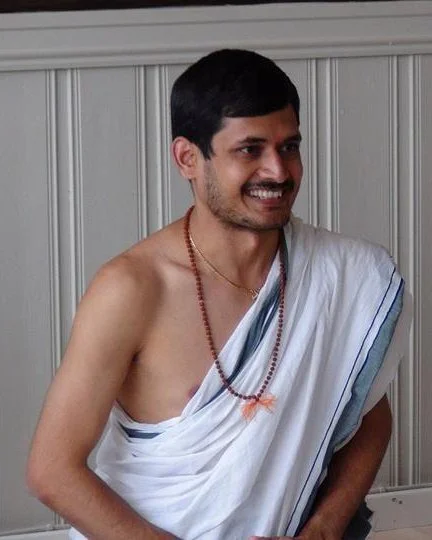
Dr. Vigneshwar Bhat is a philosopher, researcher, author, academic and Vedic scholar specializing in Indian philosophy and traditional knowledge systems.
He holds a Ph.D. in Karma Mīmāṃsā from Karnataka Sanskrit University and postgraduate degrees in Pūrva Mīmāṃsā and Sanskrit literature from Rashtriya Sanskrit Vidyapeetha, Tirupati. His academic and traditional studies encompass Vedānta, the Vedas, Dharmaśāstra, Śrauta, Smārta, Tantric and Purāṇic traditions, Yoga and Indian philosophical systems.
With extensive teaching and research experience and more than 200 publications, papers and scholarly contributions, he brings together traditional scriptural understanding and contemporary academic perspectives.
Tara Mitra has studied with him privately every week for more than twelve years. He co-leads the Tara Mitra Yoga Mentorship Programme.
FAQ
Questions
Do I need to have studied the Upaniṣads?
No. No prior knowledge of the Upaniṣads is required. The course is open to everyone interested in Indian philosophy, Vedānta, spirituality, Sanskrit and the deeper understanding of life.
Will we chant the mantras?
Yes. The course covers both the chanting and a clear understanding of all 18 mantras of the Īśā Vāsya Upaniṣad.
When are the classes?
Ten live online classes, every Wednesday, 6:30–7:30pm IST. In the UK that is 1:00–2:00pm. Start date to confirm.
What does the course cover?
The nature of the universe, the Supreme Reality, the individual Self, karma, knowledge, renunciation and liberation, through the systematic study of all 18 mantras: Īśāvāsyam, tyāga, karma, Ātman, Brahman, jagat, vidyā and avidyā, sambhūti and asambhūti, amṛtatva, satya and mokṣa.
How does this apply to daily life?
Special attention is given to the practical relevance of these teachings in our thoughts, actions, spiritual practices and approach to life: seeing the Divine in everything, performing one's duties without attachment, and balancing worldly responsibilities with spiritual pursuits.
More like this
You might also like
Chanting and philosophy
Gītā Śrōtā
A traditional study of the Bhagavadgītā in three levels, beginning with the chanting of all 18 chapters.
Live online · Mondays · Ongoing
Philosophy
Vijñāna Bhairava Tantra
The 112 meditations of the Trika tradition, studied verse by verse.
On-demand course · Three levels
Sanskrit chanting
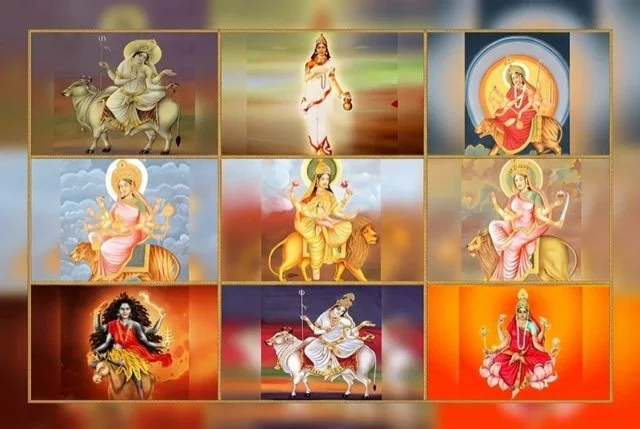
Navadurgā Stotram
Learn the complete chant to the nine forms of Devī, with pronunciation, metre and meaning.
Two sessions · £49
Ten classes with Dr. Vigneshwar Bhat
Īśāvāsyam idaṃ sarvam
Everything in this universe is pervaded by the Divine.
Wednesdays, 6:30–7:30pm IST, online. Starting date to confirm.